
Musical Mudlarking is an homage to the River Colne in Colchester, Essex. An exploration of the brackish waters of a brackish area. But can a landscape be brackish? As the salt water mixes with the fresh, so does the built environment with the natural.
From the industrial Hythe Quay to the picturesque Rowhedge village, in this stretch of estuarine river the sewage works sit opposite the university, and the nature reserve has a view of the motorcycle breakers yard.
Reversing lorry alarms from the riverside aggregates yard blur into the bird song of the Hythe Lagoons, a nature reserve built from the slurry of the sewage works next door. But what it gives with one hand, it takes with the other, as the river now struggles with nutrient rich sewage which depletes its oxygen levels.
The area is famous for its visitors; the nightingales, who arrive in April full of song, and the students who study at the university. In the 11th century the crest for the port became the raven, a nod to the visiting/ruling Danes.
This soundscape is born from the mud. Scooped from the river, it bubbles beneath a collage of riverside field recordings and upcycled instruments. Bird whistles made from recycled plastic, a one-string guitar from an ensign pole, and melodies from sampled kissing gates.
Through building instruments from found objects, this composition recognises the impact the built environments forces upon the Colne. Creating a soundscape that reflects the environmental impact of human activity.
This is the sound of a river and those who call it home.
This project was made possible with the support of Huddersfield Contemporary Music Festival, Nordic Music Days, and Ultima Festival. The piece was performed at HCMF in November 2025 and the edited performance can be heard below.
To find out more about the project which created this piece, please read the entry on my blog here, or read to discover how it was made.
Project
Musical Mudlarking
Venue
The River Colne
Type
Composition
In November 2024 I joined the Sustainable Composition & Creative Sound Practices programme. A joint opportunity from Nordic Music Days, Huddersfield Contemporary Music Festival and Ultima Festival to spend 12 months exploring what sustainability meant to me as a sound artist, both in the way I make music, and the music itself.
My proposal to the programme was centred around the idea of ‘Musical Mudlarking’, making music from found objects on or in a river, and creating soundscapes that reflect the environmental impact of human activity upon the waterway.
The first decision was which river? I chose The River Colne, specifically the stretch from Hythe to Rowhedge, a stretch I run on frequently. Once the home of a Roman port, it’s supposedly now one of the most studied estuaries in the world due to thanks to the nearby University of Essex’s marine biology department.
Local poet Martin Newell’s wrote of this stretch in his ‘Town to Sea’ poem, it reads:
Fishing boats went out from here Boys who’d bring the supper back
Hawsers, nets and winding gear Trawler, Bawley, deep-sea smack.
Oysters, gingerbread and gin Back from Pyefleet, bearing east
August out – September in Autumn sun, then mayoral feast.Here the globe exchanges riches Electronics, education
Take the place of fish and flitches Nation trades with other nation.
Underneath this eastern sky Went the weaver and his pack
Sailing ships and seagull’s cry Sea to town the trail leads back.
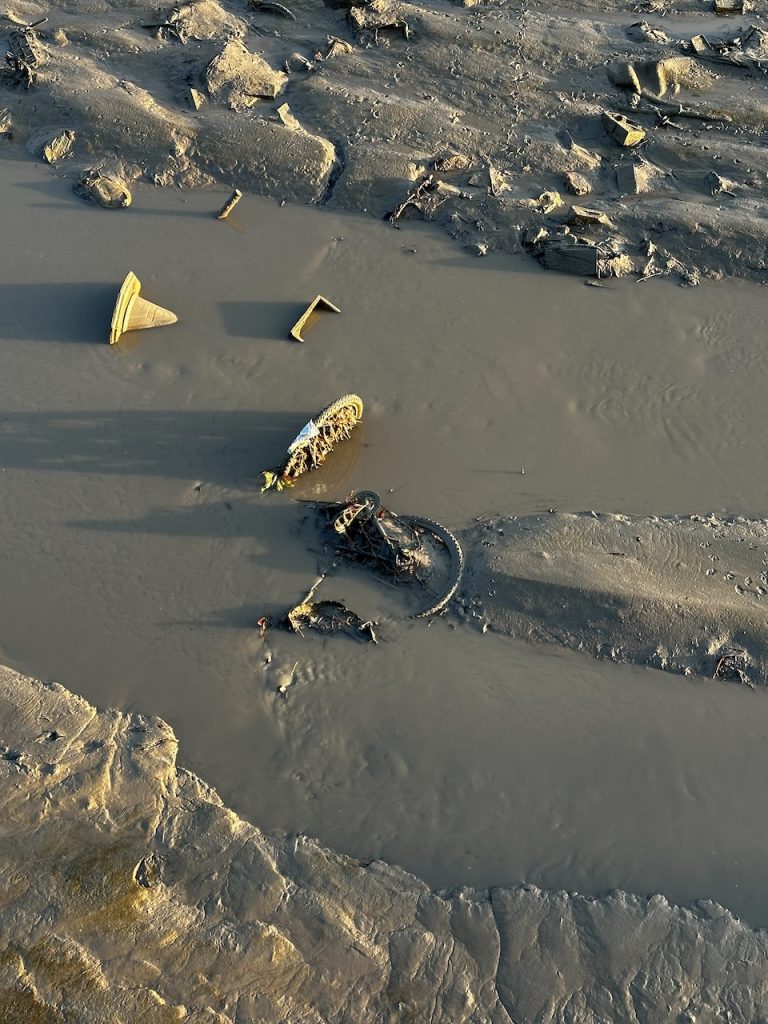
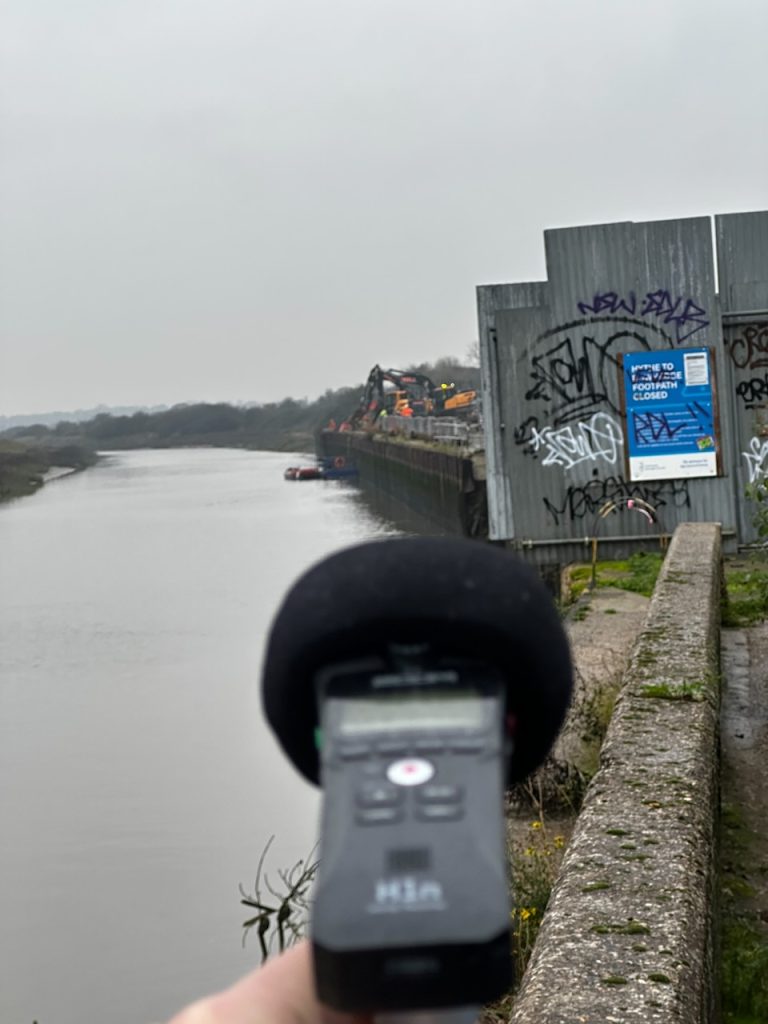
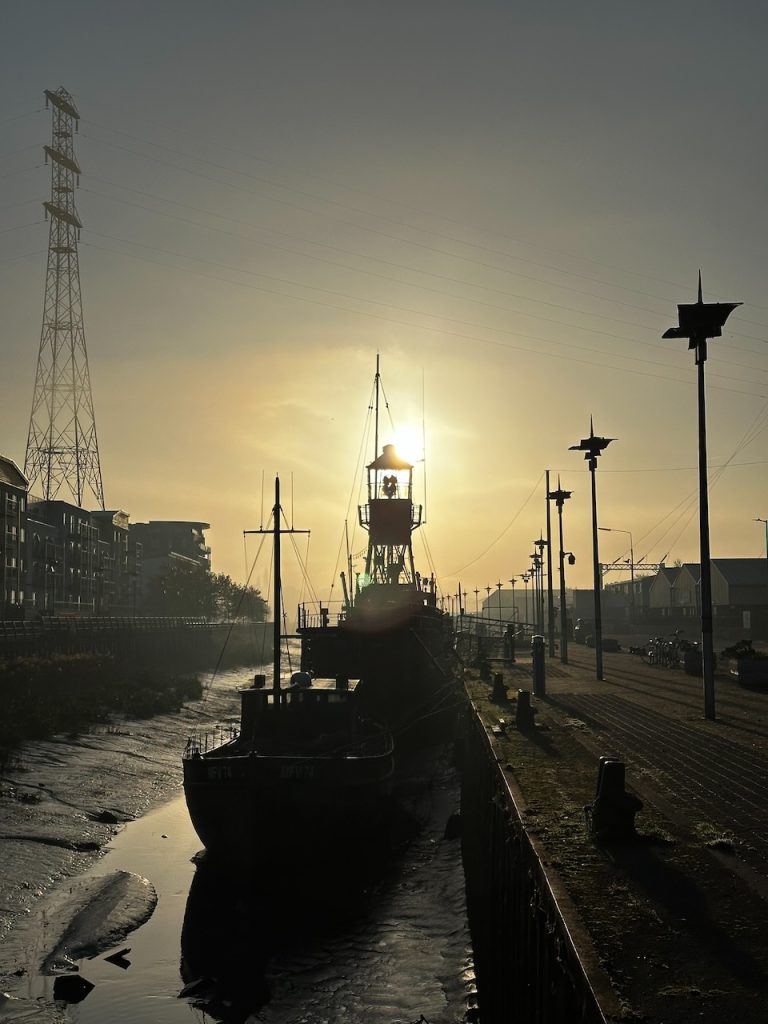
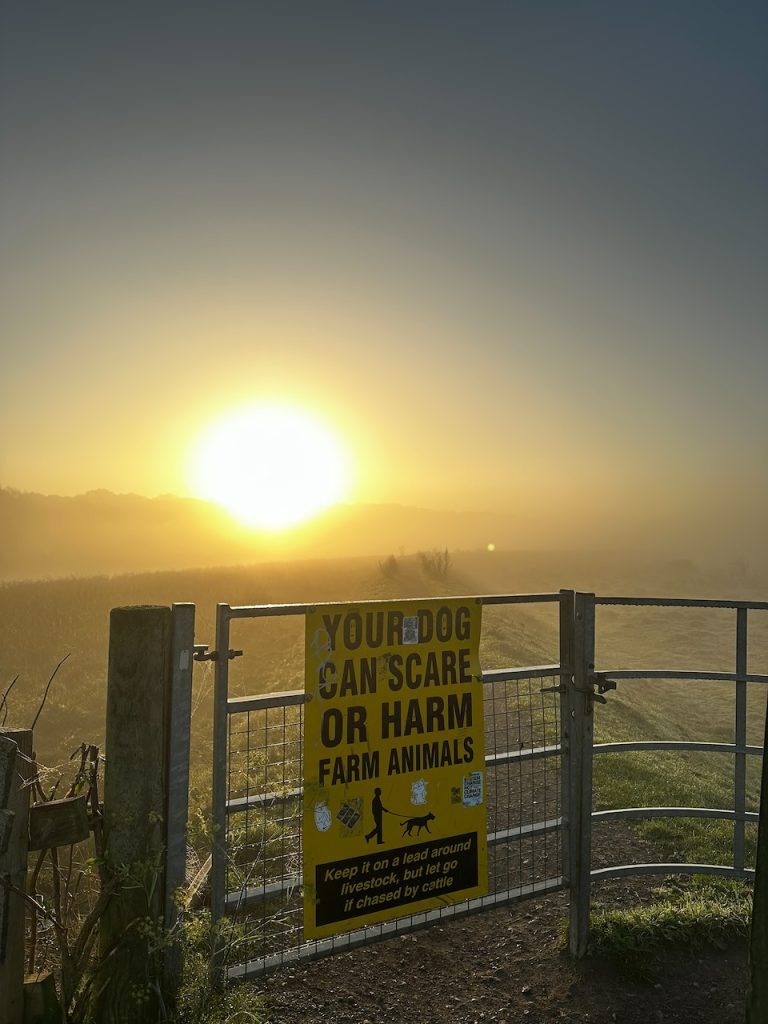
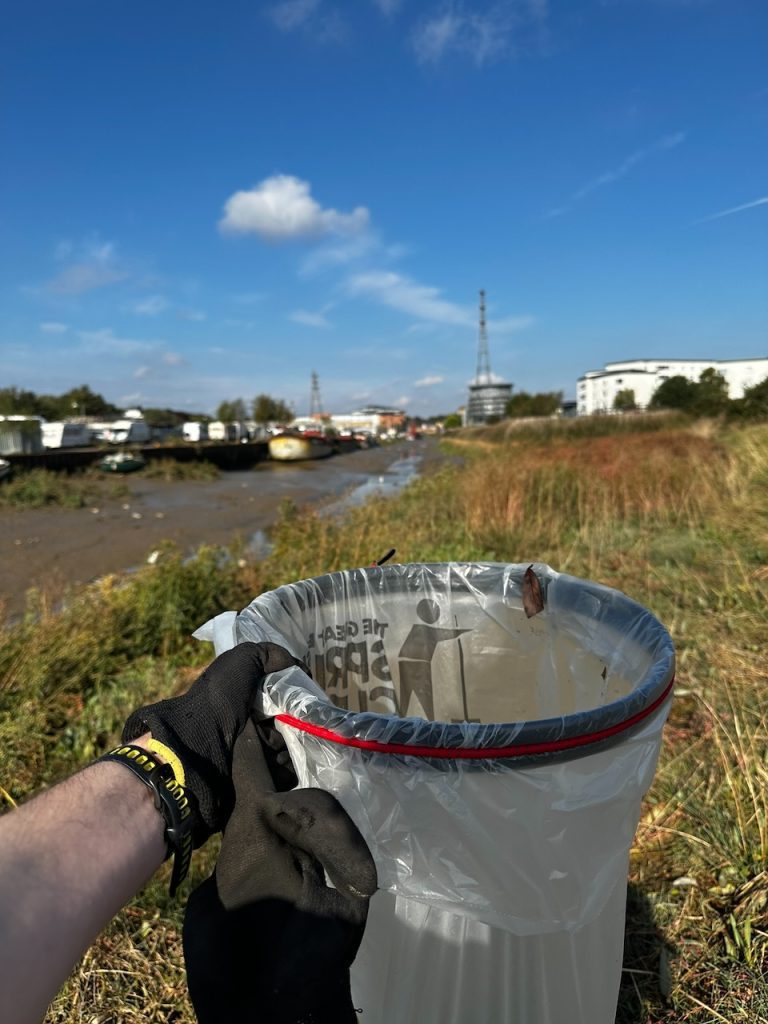
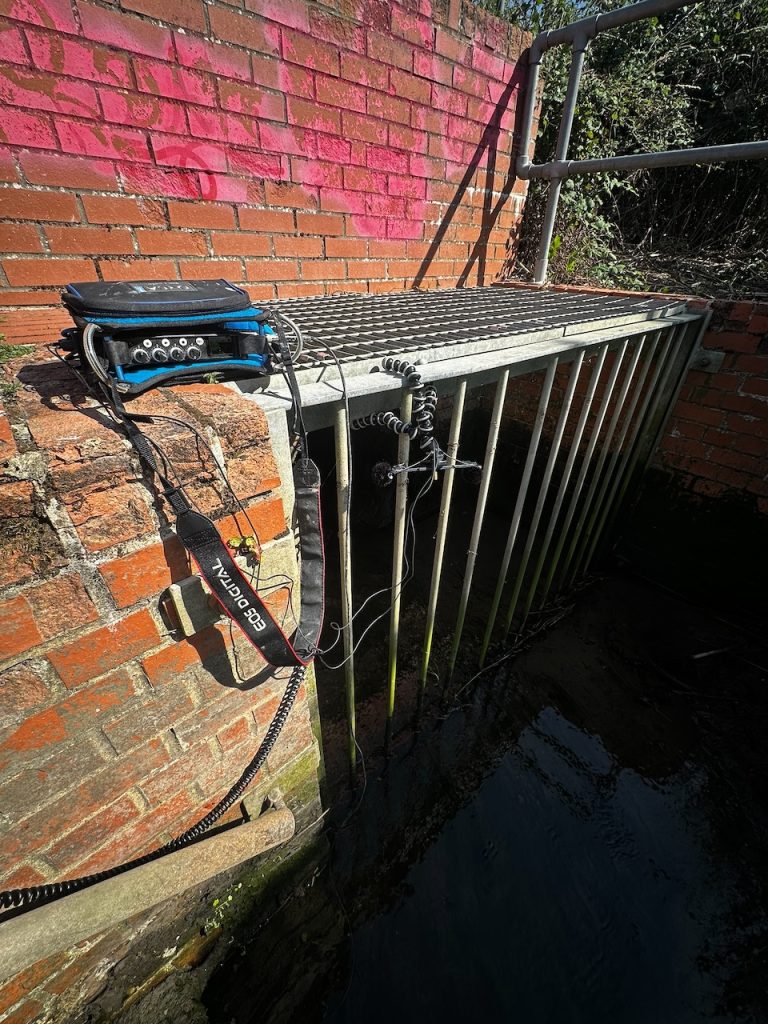
My initial field recordings of the river cemented its brackish duality, a haven for migrating birds and a home for the local bus depot and sewage works. Reversing lorry alarms blurred with bird song. An unexpected song was found in the kissing gate along the trail.
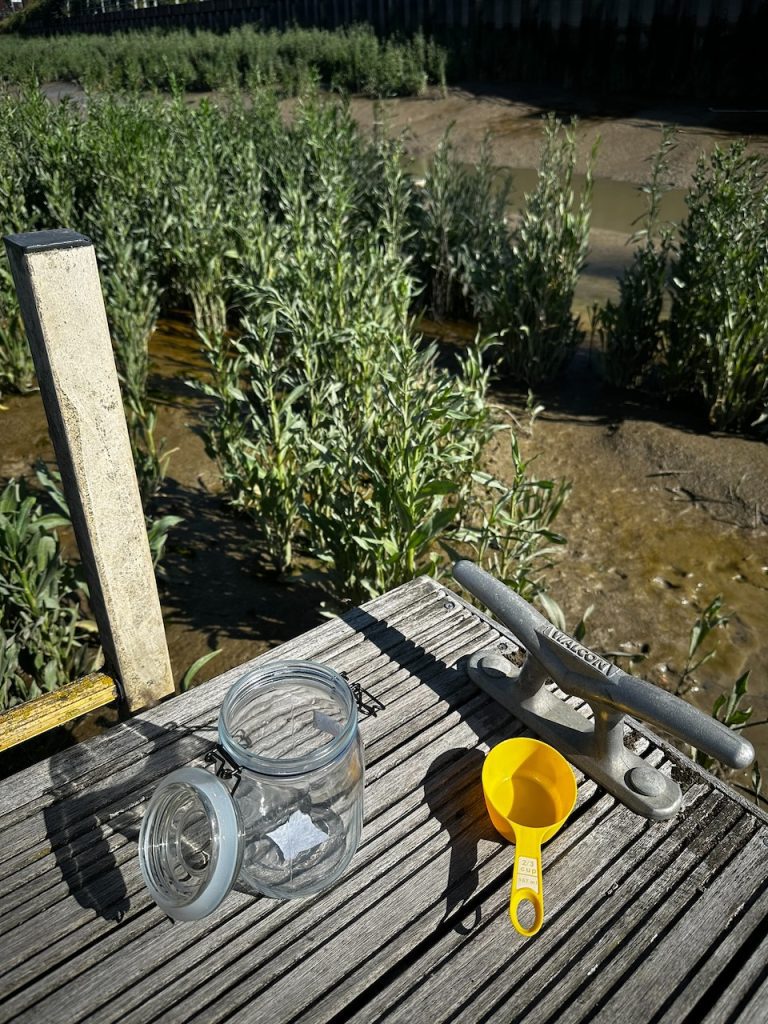
Where possible I wanted the resulting composition to be made with the river, not of it. I built instruments not just from objects I found, but also with the river itself. A small water pump played a scoop of mud plopped in a mason jar, a hydrophone amplifies the resulting bubbling water then processed inside Ableton.
Initially I had wanted to create an ensemble of midi powered percussion beaters, which would play rubbish collected from the river, however experiments found this uninspiring. I realised I wanted texture, not rhythm. Or perhaps to find rhythm in the recordings of the river, rather than imposing them upon the river through mechanised performance (though I sense there is more to explore here in future).
Another instrument I wanted to build was a bird whistle, inspired by the beautiful song of the rivers nearby visiting nightingales. Having purchased and assembled a PET Machine, I set about turning my own recycling into filament for my 3D printer and printing said whistles. Whilst the filament creation process is fiddly, the resulting sound is stunning (albeit obnoxiously loud). The ability to print large quantities of these birds facilitated incredible performance opportunities. I’ve always enjoyed blurring the line between audience member and performer, and this did so beautifully.
View this post on Instagram
In September 2025 I was invited to Ultima festival in Oslo, Norway, to share an update on my research in both a presentation and installation. The end of my presentation saw my first experiment with bird-whistle ensembles and it was a humungous success! For the festival I also created a ‘work-in-progress’ installation of the project, with bubbling mud (collected from a nearby river) mixed with a pre-recorded soundscape of the field recordings made so far.
I scooped up the mud on a run when I arrived in Oslo in what felt like a ritualistic experience having just spent 30 hours on trains from Essex to Oslo, experimenting with ‘slow travel’. What could have been achieved in an afternoon on a plane wiped me out for days, to do so in the most efficient way. If anything travelling even slower would be preferable, as at least then you can maybe get a good night’s sleep.
View this post on Instagram
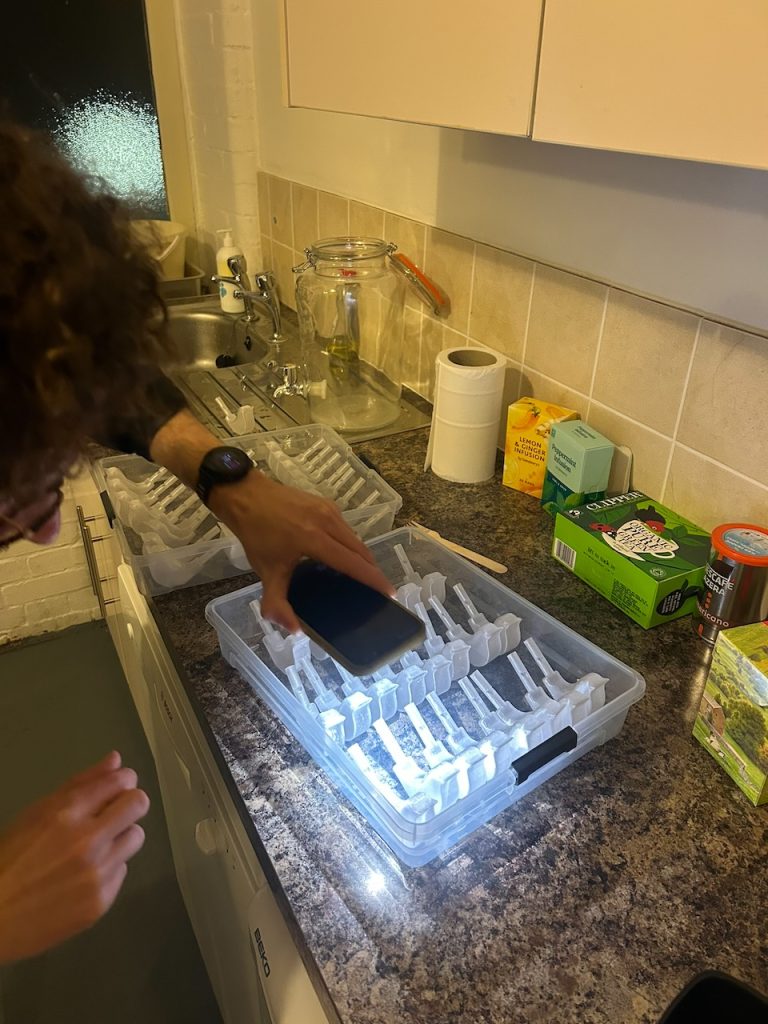
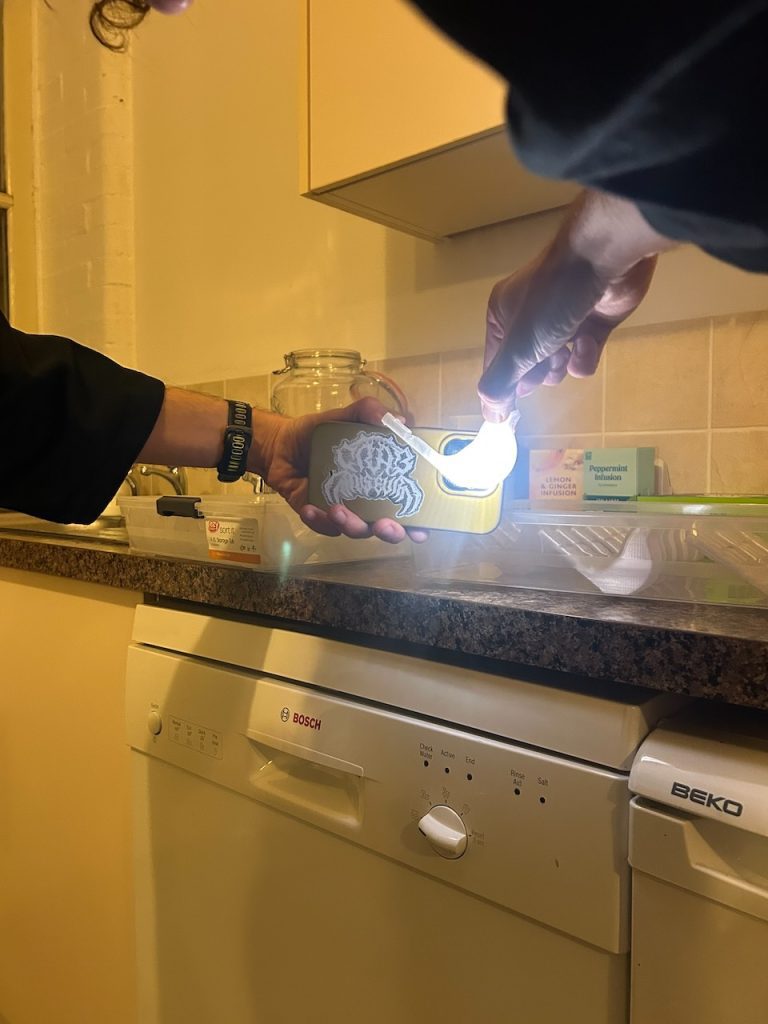
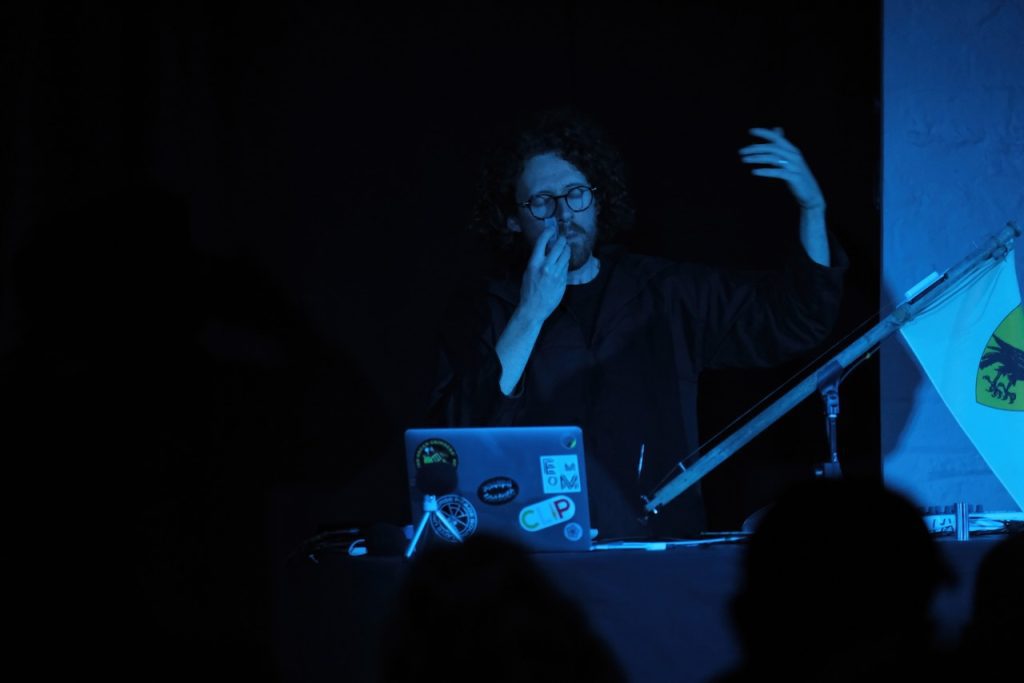
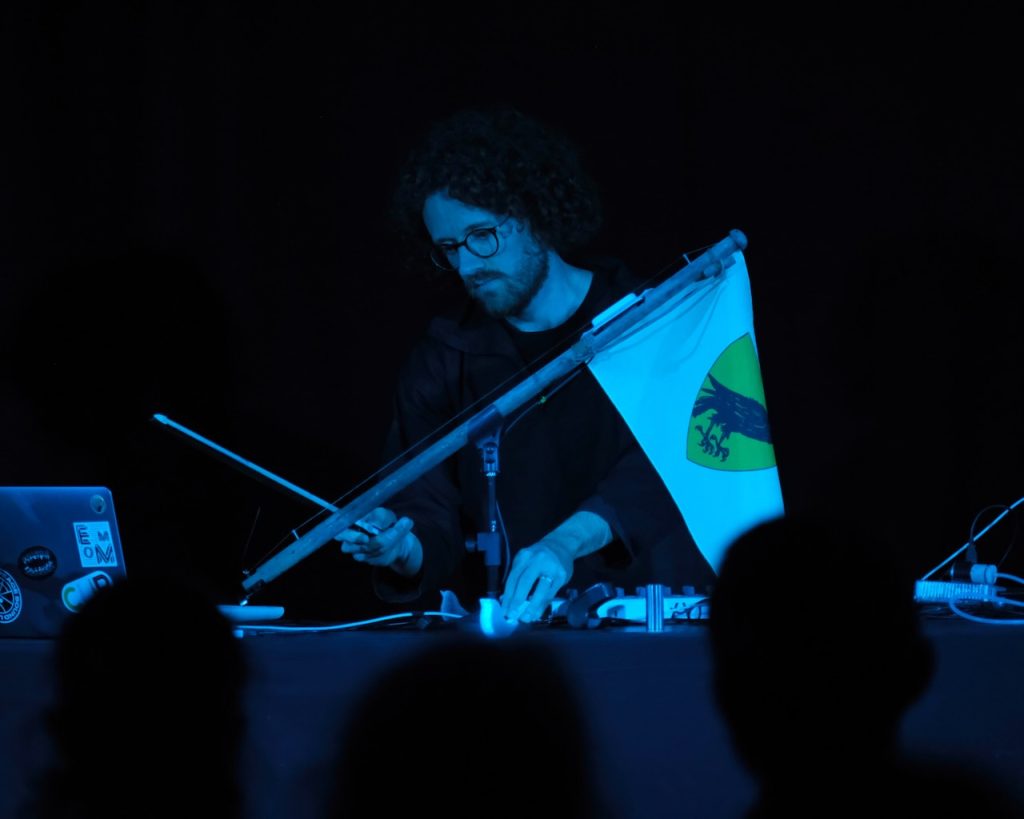
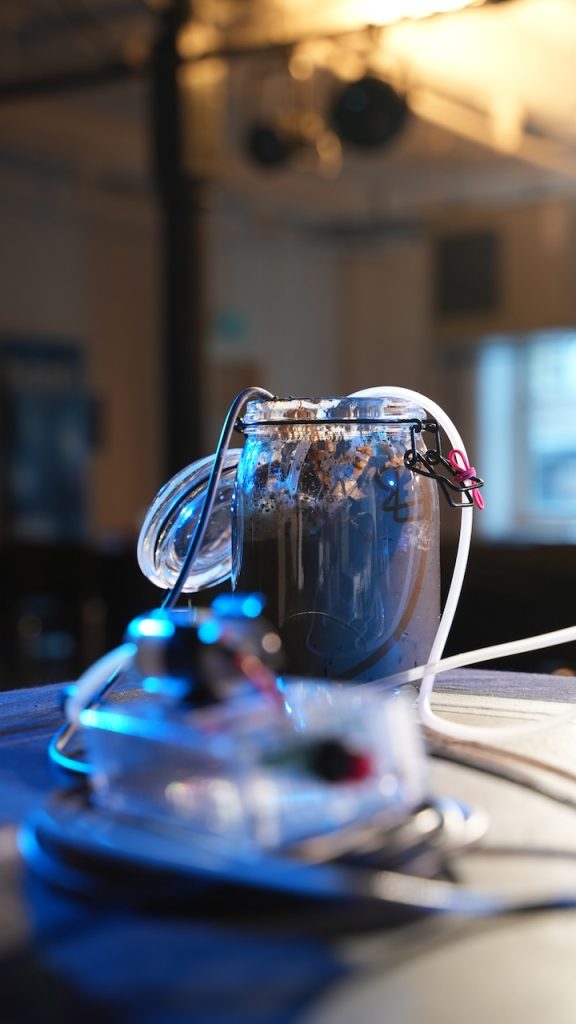
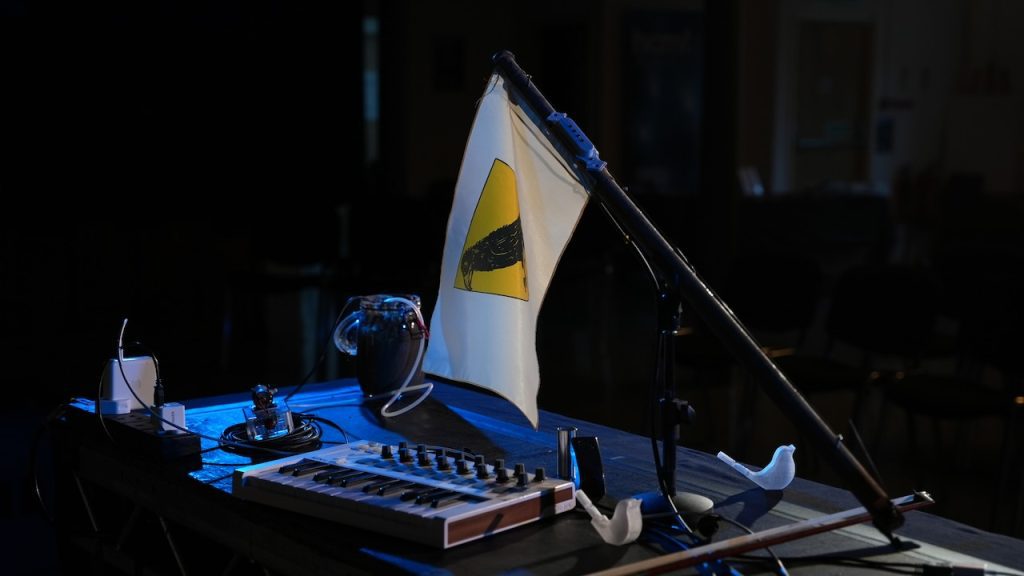
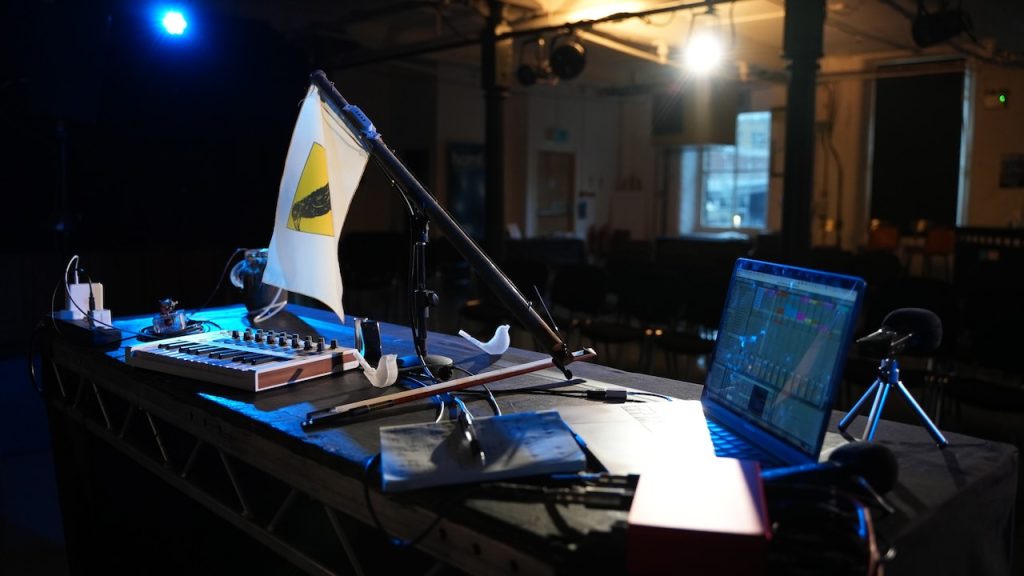
As I prepared for my performance at HCMF, I was lucky to receive mentoring from the incredible Kathy Hinde. Her advice and expertise was invaluable in helping me understand what I wanted to discover and achieve with this project. The MIDI solenoid percussion was discarded, instead a ensign flag pole I discovered on a litter pick was upcycled into a one string guitar – adorned with the ancient flag of the port of Hythe.
View this post on Instagram
The piece was loosely arranged into three sections; the trail, the mud and the more than human. I wanted to convey the brackish nature of natural and industrial landscapes, so the piece moves from delicate field recordings with haunting flag-pole guitar drones, to sounds of bubbling mud (scooped from the actual river) with distorted sounds of construction work repairing the river banks and a mournful descending bassline representing societies self-serving relationship to the river as shown by the discarded trolleys, bicycles and litter.
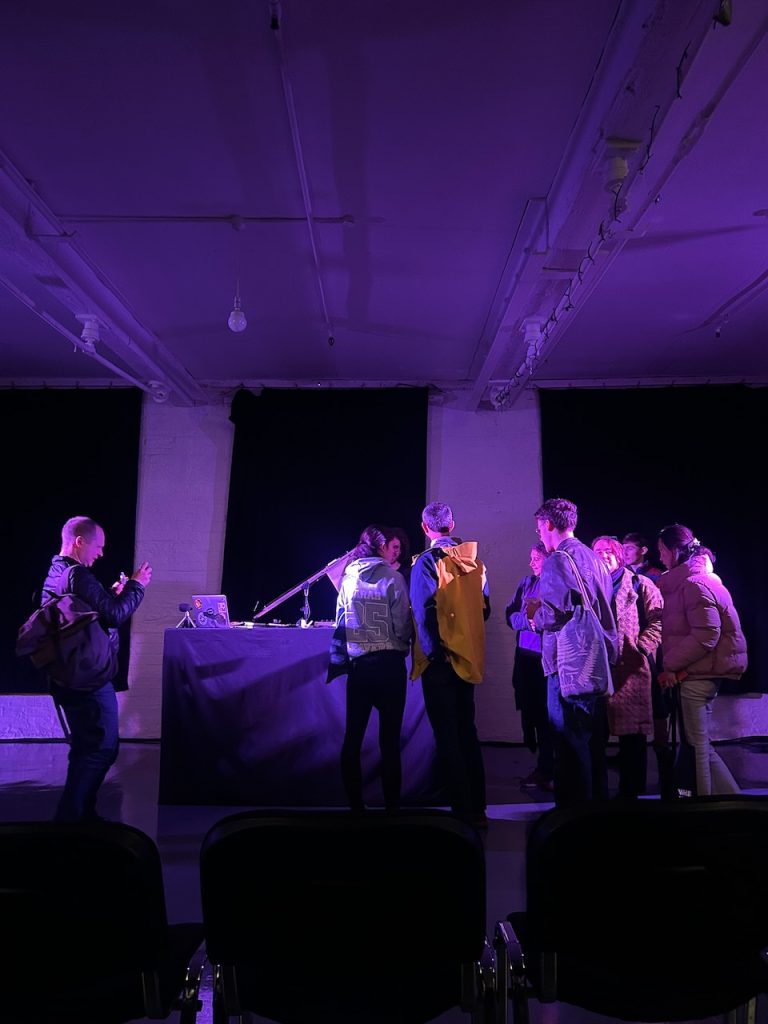
The show itself was spectacular, as the audience arrived they were given a bird whistle – and who can’t help themselves from having a go. As I sat backstage, it felt somewhere between a dawn chorus and an orchestra tuning. Whilst I had heard a small group play the bird whistles together I certainly hadn’t conducted them, so the feeling was phenomenal as the audience erupted with bird song upon my invitation.
I have always enjoyed place-based work, I find comfort in creative restriction. This project has certainly confirmed that – and presented a format I would love to repeat at other bodies of water.
View this post on Instagram